ADVERTISEMENT
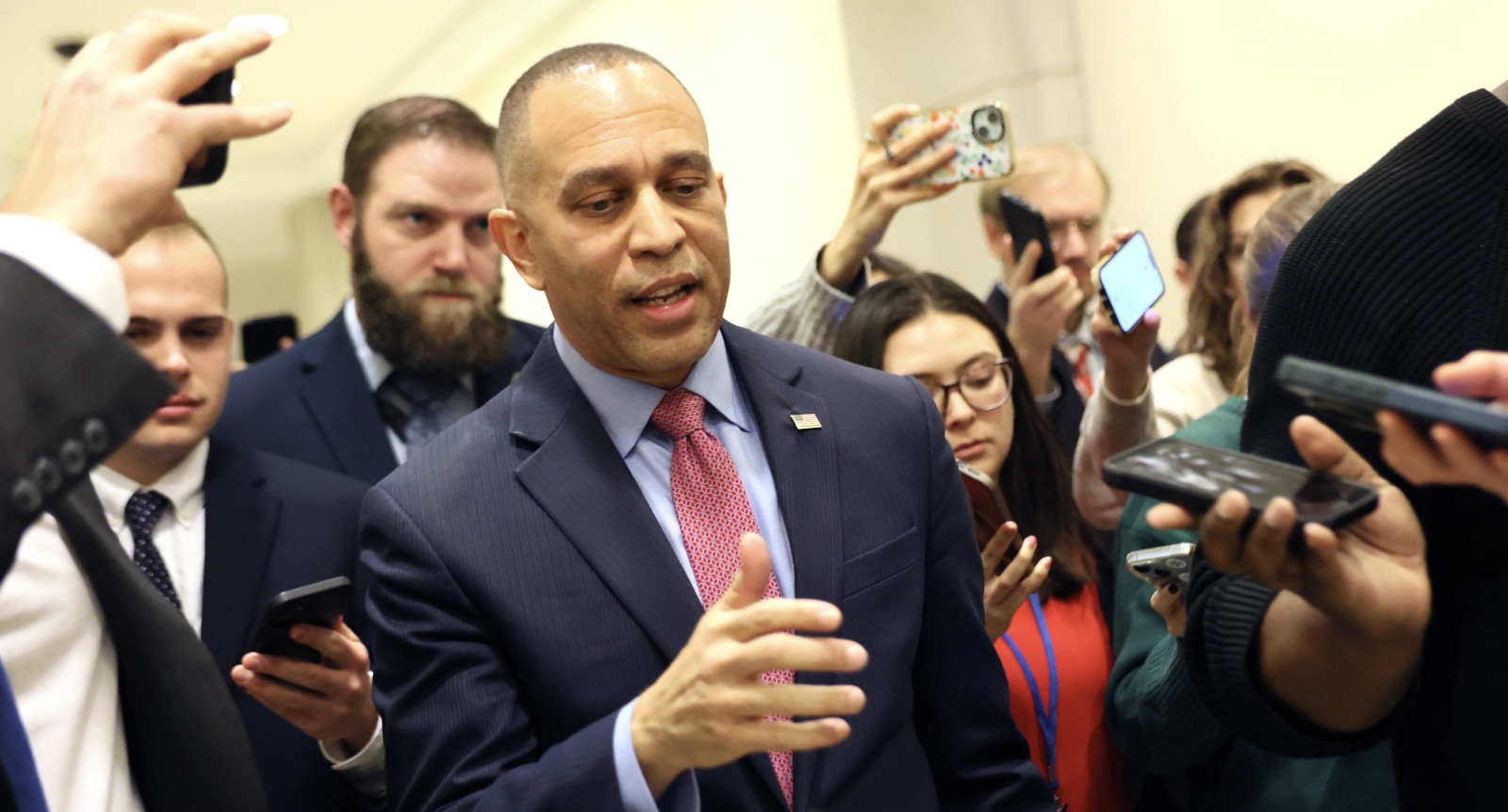
House Minority Leader Hakeem Jeffries (D-N.Y.) may find himself caught in the very blue wave he hopes to ride into power this November.
This group of new students could potentially be the first challenge to the previously unyielding support.
A group of viable candidates has made it clear that voting for Jeffries as speaker is not a given if the Democrats win the House.
Since then, things have only gotten worse for him.
Mai Vang, the leading progressive primary challenger to Rep. Doris Matsui (D-Calif.), previously said she would “support the person that my future colleagues elect as our leader.”
When asked if she would support Jeffries’ leadership, Claire Valdez, a New York State Assembly member who is running to replace retiring Rep. Nydia Velázquez (D-N.Y.), said in an interview with Axios that “there would need to be some conversations.”
Anabel Mendoza, a progressive candidate in Illinois’ 7th District, told Axios that she wants Rep. Rashida Tlaib (D-Mich.) to be in charge because she is “10 toes down on what matters.”
Also, the redistricting fight is now going very badly for Democrats.
“On April 22, House Democrats were riding high. They’d just won a huge gamble in Virginia, spending tens of millions of dollars on a redistricting referendum aimed at netting them up to four new seats. President Donald Trump — who set off the unprecedented national redistricting fight in Texas last year — was tanking in the polls, dragging down Republicans everywhere,” Punchbowl News reported.
In a worst-case scenario for Democrats, as many as 10 seats might flip to Republicans going into November.
Republican National Committee Chairman Joe Gruters says Republicans may outspend Democrats this election cycle, a dramatic reversal from past campaigns where Democrats often held the fundraising advantage.
Host Mike Slater asked Gruters to put the reported $70 million Democrats spent in Virginia’s recent redistricting battle into perspective.
“The DNC has minus 4 million [dollars], and it wasn’t the DNC that plowed $70 million: It was the collective,” Gruters said.
“So, if you look at the collective on the right, we may have $800 million,” he continued.
“The collective on the left may have $350 million, and when you have the court, there’s gonna be a court case that is ruled on in the next week or two, coordinated campaign limits, which will magnify that, which will allow full coordination and allow the parties to spend at the candidate rate, which is massive for us,” he said.
Gruters said the financial landscape could mark a historic break from previous election cycles.
According to Gruters, the RNC itself is in far stronger shape than the Democratic National Committee.
This article may contain commentary which reflects the author’s opinion.
ADVERTISEMENT
