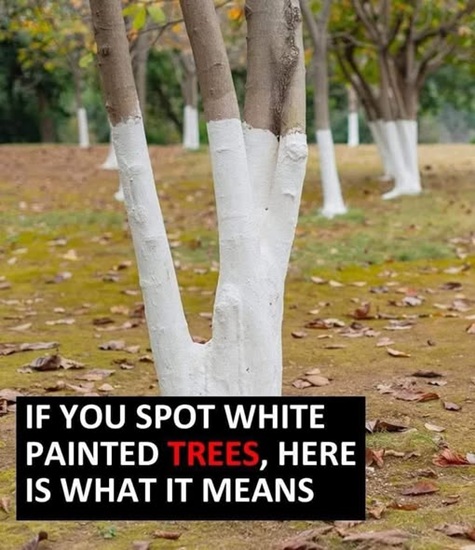
appear decorative at first glance.
The practice actually serves practical and protective purposes rooted in environmental science and arboriculture. Unlike naturally white-barked trees such as birch species, most trees do not naturally develop white trunks. Instead, the white coating seen on some trees is typically applied by humans for specific functional easons. This intervention is especially common in managed landscapes such as orchards, parks, roadside plantings, and young tree plantations where environmental stress can significantly impact tree health.
Protection Against Sunscald and Temperature Stress
One of the primary reasons trees are painted white is to protect them from a condition known as sunscald. Sunscald occurs when tree bark is exposed to rapid temperature fluctuations, particularly during winter months. On cold nights, bark temperatures drop significantly, but during sunny winter days, direct sunlight can cause the bark to warm up too quickly.
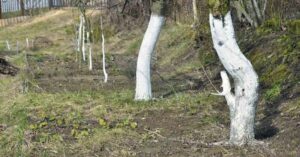
This rapid heating and cooling cycle can damage the outer layers of bark, leading to crackingor splitting. Once the bark is compromised, the tree becomes vulnerable to infections, fungal growth, and insect infestations. In severe cases, this damage can affect the long-term health or survival of young trees.
White paint helps reduce this risk by reflecting sunlight away from the bark, thereby stabilizing temperature changes. By minimizing heat continue reading …